
Choosing a catalogue site, a seller, an item and an agent
Four choices come before any storage bill. Each one is easier with a few concrete checks.
Judging a spreadsheet site
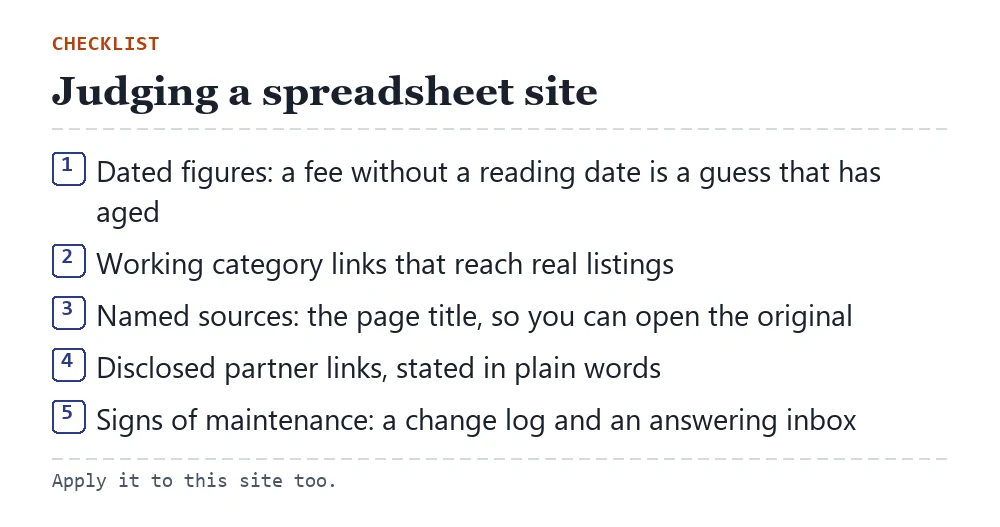
- Does it date its figures? A fee or a delivery time without a date is a guess that has aged.
- Do the category links work, and do they lead to real listings rather than a sign-up wall?
- Does it say where its rules come from, by page name, so you can check the original?
- Does it tell you when it earns from a link? This site does: LitBuy links carry a partner invite code.
- Is somebody maintaining it? Look for a change log and a contact address that answers.
Judging a seller
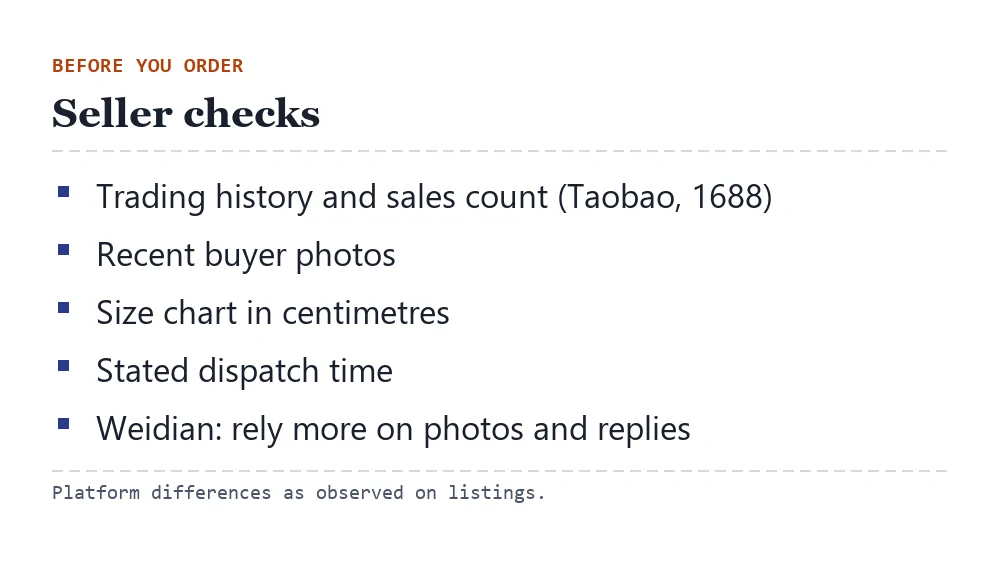
On Taobao and 1688, look at how long the shop has traded, how many sales the listing shows and what recent buyer photos look like. Weidian shops often show little of this, so the photos and the seller's replies carry more weight.
Check the size chart's centimetre figures against a garment you already own. Ask the seller, through LitBuy, before ordering if anything is unclear.
A seller who ships slowly delays your item's stocking date, which pushes its free period later. A seller who ships the wrong size uses up your return window. Both are reasons to prefer shops with clear dispatch times.
Choosing items when storage follows price
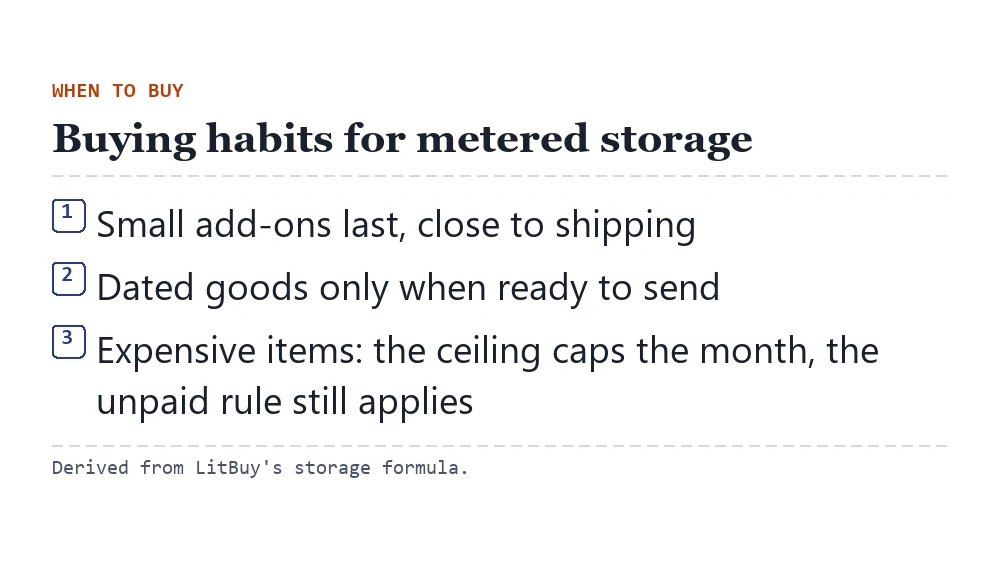
If you tend to collect items over weeks before sending one parcel, the storage rule changes the maths of small add-ons. Each add-on under ¥500 costs ¥1 a day once its 90 days pass, so a ¥40 extra that waits 40 days past day 90 has cost as much as itself.
Three habits help. Buy the small items last, close to when you plan to ship. Buy dated goods (food, cosmetics, batteries) only when you are ready to send them. And for expensive items, remember the ceiling: above ¥5,000 the monthly cost stops growing, but the 30-day unpaid rule still applies.
Nothing here says what to buy. It says when to buy it.
What makes an agent trustworthy
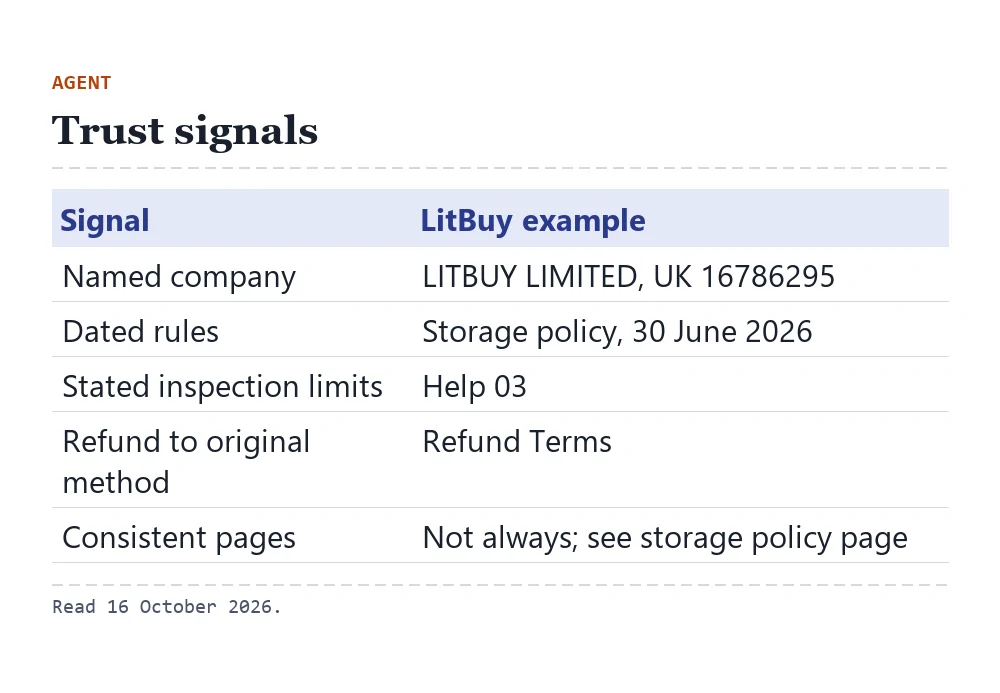
Choosing an agent you can trust comes down to a handful of checks, each of which LitBuy can be held to:
- A named operating company and a way to reach it. For LitBuy that company is LITBUY LIMITED, UK company 16786295, with [email protected] on its contact page.
- Published rules with dates, including the unwelcome ones such as storage fees and return charges.
- Clear limits on what its inspection covers, rather than promises it cannot keep.
- Refunds that go back to the original payment method, which LitBuy's Refund Terms state.
- Consistency between pages. Where LitBuy's pages disagree, this site prints both sides.
Why some buyers pick LitBuy, and when not to
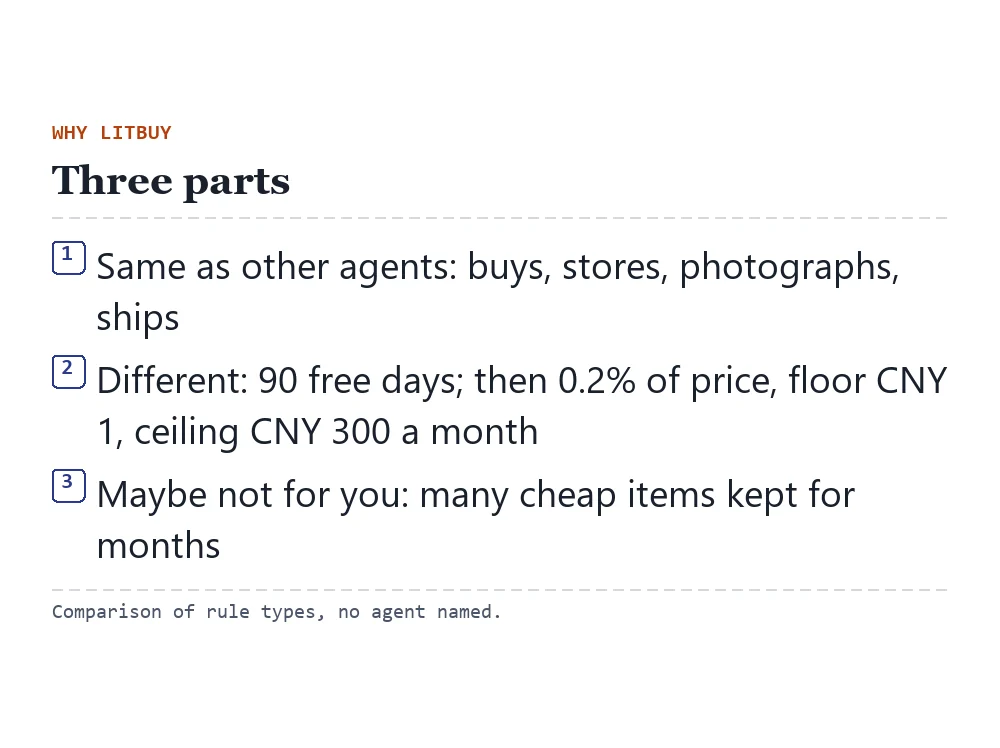
What every agent does: buys from Chinese marketplaces for you, stores the items, photographs them and ships them in parcels. LitBuy does the same, and the free purchasing service is common across agents now.
So why LitBuy rather than another agent? What is different: 90 free storage days is long, and the fee after it follows the item price with a one-yuan floor and a ¥300 monthly ceiling. That suits buyers who ship expensive items, and anyone who ships within 90 days. LitBuy also publishes its inspection limits, return charges and storage examples in plain figures.
When another agent may fit better: if you routinely keep many cheap items for months, a flat fee per period could cost less than ¥1 per item per day. Compare the storage rule of any agent you consider, in its own words, before you choose.
Other agents and their storage rules
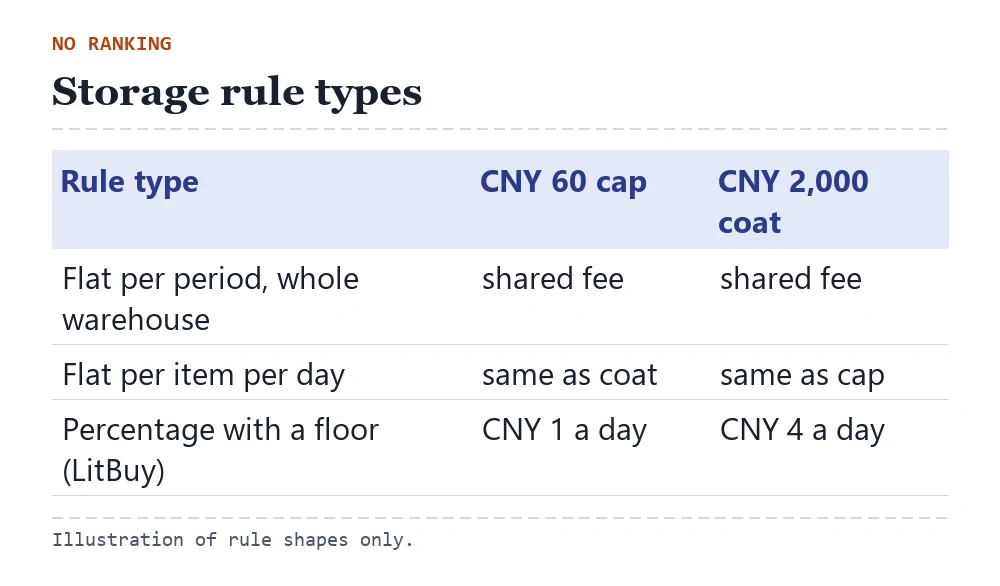
Agents you will come across bill late storage in a few different ways. Some charge a flat amount per period for the whole warehouse, some a flat amount per item per day, and some, like LitBuy, a share of the item's price. Free periods range widely too.
There is no best rule. A flat per-item fee costs the same for a cap and a coat; a percentage costs the coat more; a percentage with a floor, like LitBuy's, treats everything under a set price the same.
We do not rank agents. If you compare, write down three figures for each: free days, the fee after them, and what happens when fees go unpaid.
Why this spreadsheet adds a meter
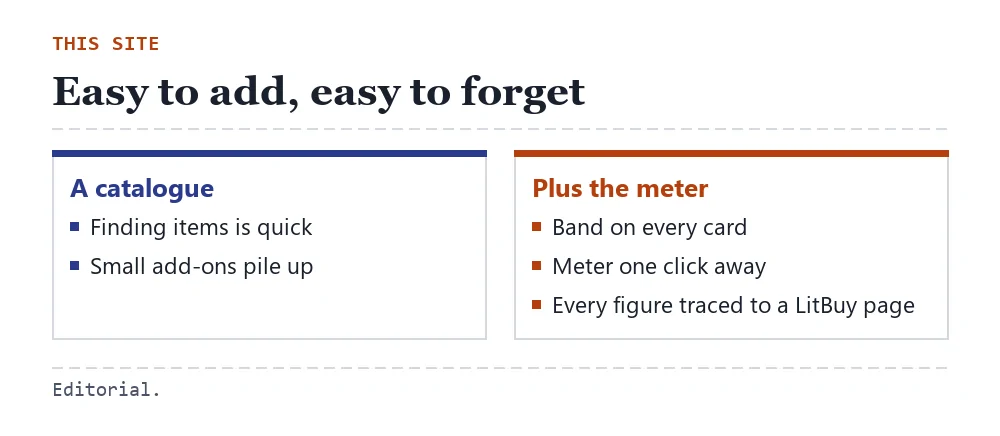
A catalogue makes finding items easy, which is the point. It also makes adding small things easy, and those are the items LitBuy's floor affects most.
Putting the storage band on each card, and a meter one click away, keeps the cost of waiting in view while you browse. The rest of the site exists so that every number on the cards can be traced to a LitBuy page and a date.
Next receipt in this set: Help routes and FAQ