
The number LitBuy's storage fee is based on
The formula needs a price. LitBuy's policy gives one name for it in the rule, another in the example table and a third in the notes. This page sorts them out.
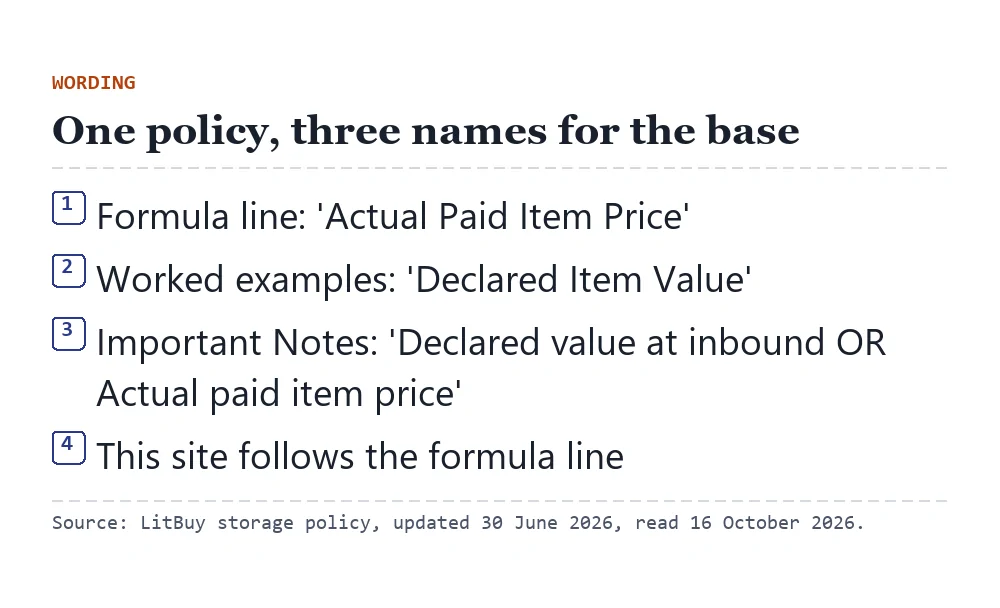
Three wordings in one policy
The formula line reads: Daily Fee = Actual Paid Item Price × 0.2%. The worked examples label the price as Declared Item Value. The Important Notes say overdue fees are based on "Declared value at inbound OR Actual paid item price", followed by: please declare truthfully to avoid affecting your rights.
We treat the formula line as the rule, because it is the statement of how the fee is calculated; the table illustrates it and the notes hedge it. For bought items the two values are normally the same number anyway, because what you paid is what LitBuy records.
The difference becomes real for forwarded parcels, which have no paid price.
Bought through LitBuy: the price you paid
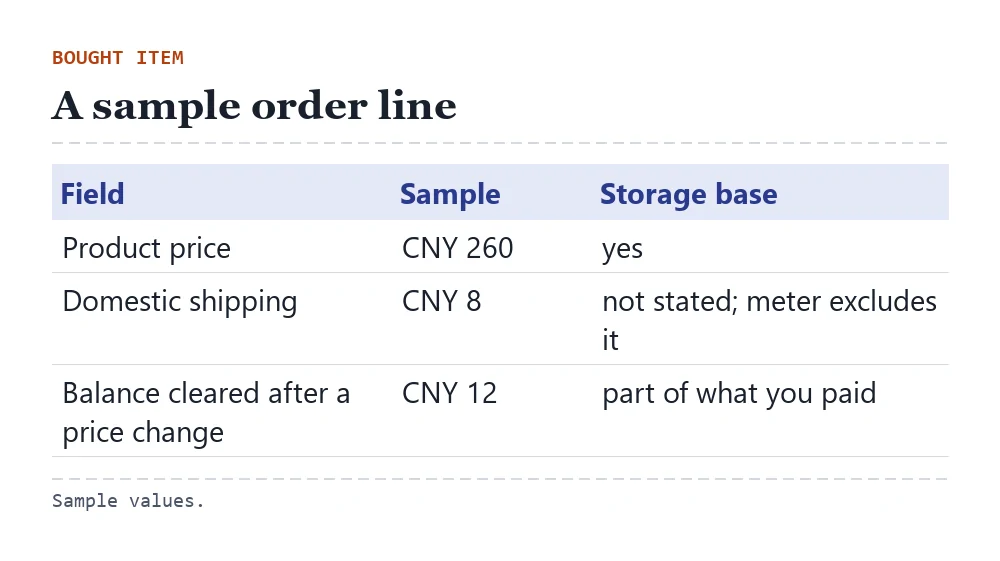
For an item LitBuy bought on your behalf, the price paid is in your order: the product price in yuan for that line. The seller's domestic shipping to the warehouse is a separate figure on the same order.
LitBuy does not say whether domestic shipping is part of the item price for storage. The plain reading of "item price" is the product price alone, and that is what the meter assumes.
If the seller changed the price after you ordered and LitBuy asked you to clear a balance, the cleared amount is part of what you paid. The order details page is the place to check.
Forwarded parcels: the value you declare
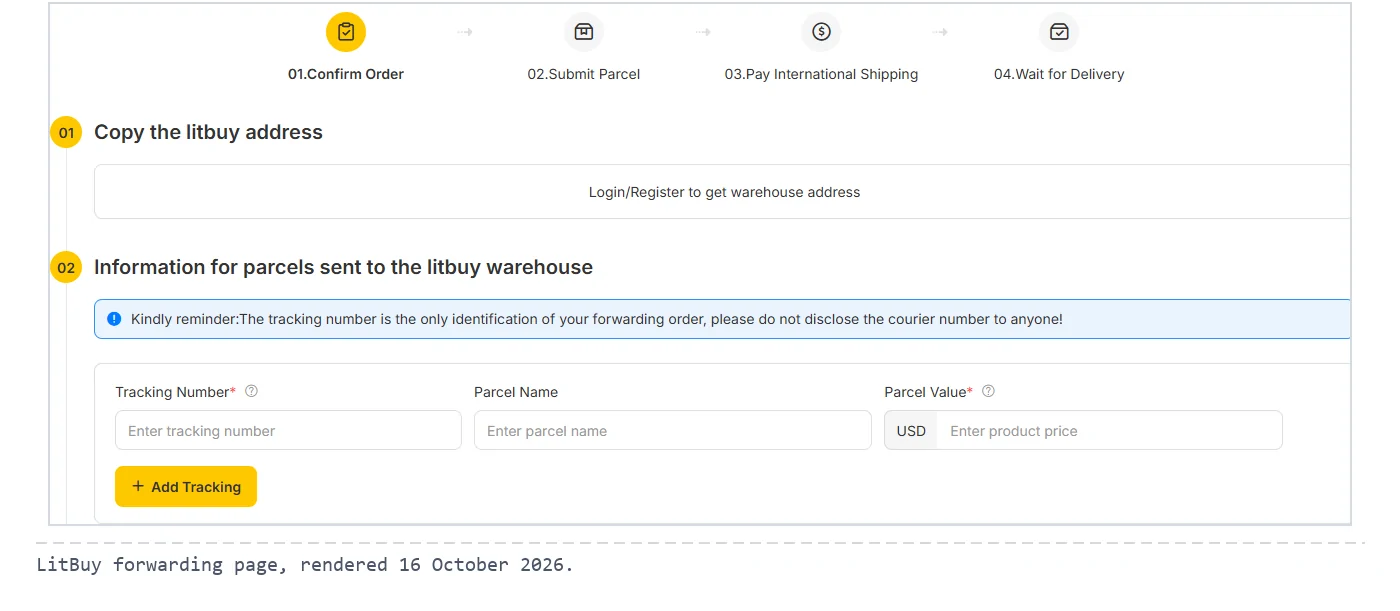
Forwarding lets you send your own parcels to LitBuy's warehouse. The forwarding page asks for a tracking number and a parcel value, entered in US dollars. LitBuy's forwarding agreement says it offers no after-sales service for forwarded goods.
With no purchase price, the only basis left is the declared value at inbound. The policy does not say how a dollar value becomes a yuan base for a fee that is settled in yuan.
On the meter, choose declared value and type the yuan figure you expect. The result is an estimate; the figure under My Warehouse is the real one.
Why a truthful value matters twice
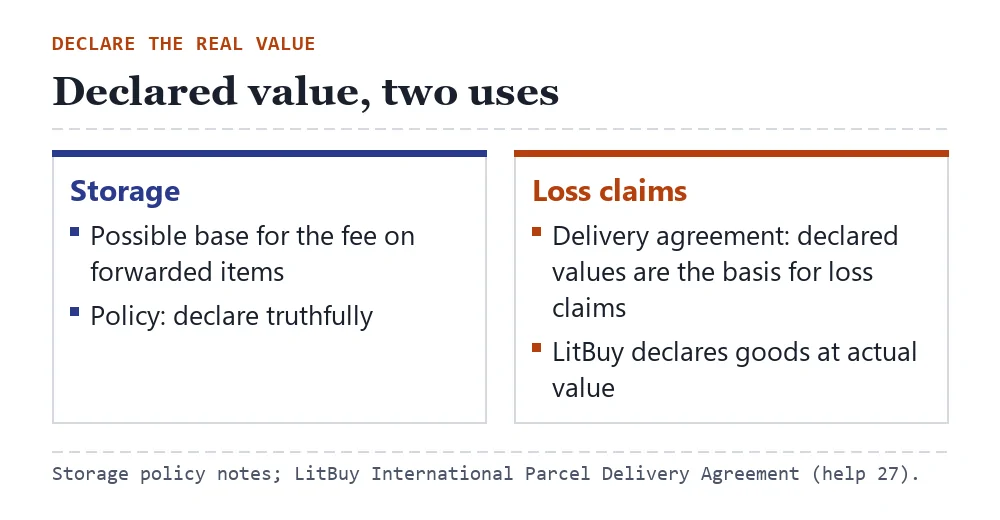
The storage notes ask you to declare truthfully. LitBuy's international delivery agreement says something related about shipping: it declares goods based on their actual value, and declared values serve as the basis for loss claims.
So the same instinct to keep a declared value low would cut a storage fee and also cut what a lost parcel can be compensated at. This site does not give advice on declarations beyond quoting LitBuy: declare the real value.
Customs rules in your own country apply on arrival, whatever value is written on the parcel.
Coupons, refunds and the paid price
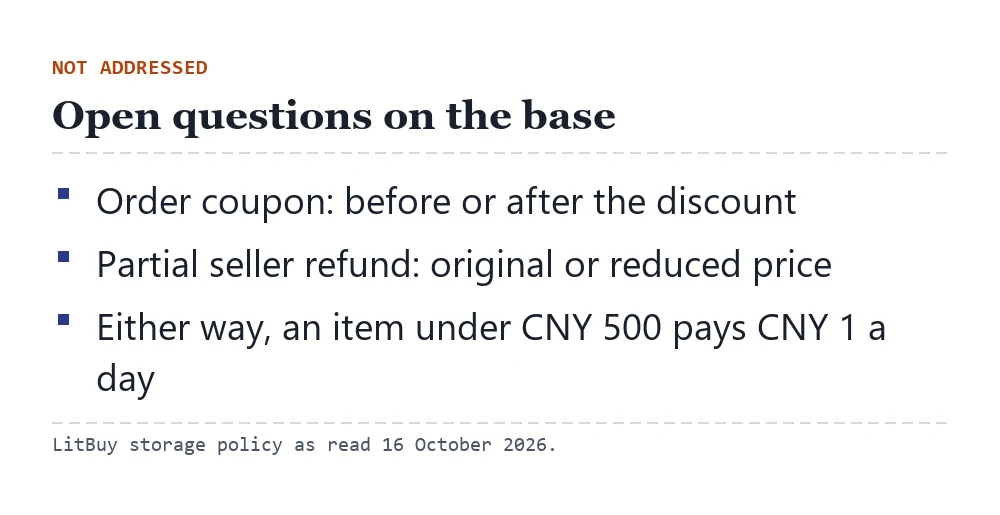
LitBuy's coupons mostly apply to shipping, not to item prices, so they rarely touch the storage base. Where an order coupon lowers what you paid for an item, the policy does not say whether the fee follows the price before or after the coupon.
A partly refunded item, for example after a seller refund for a defect, raises the same question with no published answer.
In both cases the difference is small inside the 0.2% band and zero on the floor: an item under ¥500 pays ¥1 a day either way.
One order line, several units
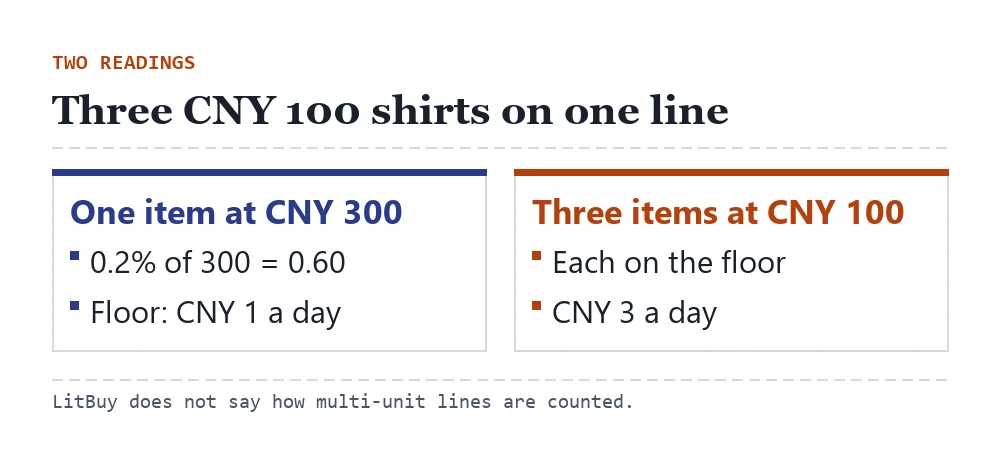
The policy charges "per item" and defines an item as an order number starting with K. If you buy three identical shirts on one line, it does not say whether that is one K-numbered item at three times the price or three items.
The two readings give different bills. Three ¥100 shirts as one ¥300 item pay ¥1 a day; as three items they pay ¥3.
Look at how your warehouse page lists them. If each unit has its own line with its own number, enter each one on the meter separately.
Next receipt in this set: Charges beyond the item price